Author: Kyle A. Massa (Page 14 of 29)

Creating the Cover of “Monsters at Dusk”

A book without a cover is like a burrito without a tortilla. For quite some time, that’s what I had with Monsters at Dusk.

That’s the title of my upcoming book, by the way. It’s a collection of short stories (and one novella), all about—you guessed it—monsters. I had the stories, I had the title, and I even had the pretentious quotes at the beginning. But that was just the filling. I needed to wrap it all up before anyone could take a bite.

Enter Nathan Rumsey. Nathan is a designer, a former co-worker, and a good friend of mine. He designed the cover of my first book, Gerald Barkley Rocks, and he did a fantastic job. (If you haven’t seen it, please do check it out. And while you’re looking at the cover, you could, you know, buy the book. If you feel like it.)

The Cover of Gerald Barkley Rocks

I had a specific idea in mind for Gerald Barkley Rocks and Nathan executed it brilliantly. I can’t remember the exact description, but it went something like this…

Yo Nathan! I’m looking for a spinning vinyl record on a turntable. The color red is essential to the book, so I’d like that to be a key element of the cover as well. Perhaps the needle is scratching a line of blood into the disc? Also, since the book has a mostly amusing tone, I don’t want the cover to feel too creepy. Looking for more of a lighthearted feel.

He turned that description into this gorgeous cover…

Nathan absolutely nailed it, as you can see. The only part that didn’t quite work was the needle scratching blood on the record; Nathan tried it, but it didn’t translate well to the cover. Especially in thumbnail size, the record needle looked more like a water cooler.

Luckily for me, Mr. Rumsey translated the needle idea to the title font instead. Notice the droplet of blood that hangs from the letter C in “Rocks.” Love it!

What’s more, I appreciate how Nathan addressed the challenging bits of my description. For example, how does one make a bloody cover lighthearted and not creepy?

Nathan did. He used bright colors that contrasted with the black background. Furthermore, he used a faded font that suggested retrocelebrationism over anything more sinister (like how I coined a new term there?).

But enough about the past. Let’s focus on the future.

The Cover of Monsters at Dusk

Here’s an approximation of my description for Nathan:

Ahoy Nathan! This time around I’m writing a short story collection. As you can guess from the title, each story is about a monster. Dusk (or more generally, times of transition) is a key theme.

Since it’s several stories in one, I don’t want a specific character or monster from any one story featured too heavily. I want something slightly creepy, yet also somehow humorous, because these aren’t straight-up horror stories. Other than that, I have no strong opinions or ideas. Hope that helps!

Clearly not the most descriptive description. Yet I was lucky to be working with a creative guy who can make a lot from a little. I sent three stories from the book to Nathan, then waited.

A few weeks later, Nathan presented a handful of concepts. There were many more than these, but here are several of those rough sketches:

Monster at Dusk Sketches

The concept was totally cool. In the top middle row, for example, I like how you can see the sun dipping below the horizon line. Furthermore, I was intrigued by the placement of the title, particularly the way the word “Dusk” creeps along the ground. My only concern here was that the word “Monsters” would be difficult to parse, especially in thumbnail size.

The bottom left image really caught my attention. I loved how the title was composed of early evening light passing through a window. The tree in the background gives that slightly creepy tone I mentioned in the description without branching into horror.

I told Nathan I was intrigued. He delved deeper and returned with more concepts.

Looking pretty good now, huh? Nathan worked his magic again, this time fleshing out the colors and adding a few more experimental elements. Here I loved how it was now much easier to read the book’s title. And again, I enjoyed the placement of the words along the floor and wall.

For the images along the top row, I wasn’t sure how I felt about the faces in the darkness. They achieved that subtly-creepy-yet-slightly-humorous tone I mentioned, yet they felt a bit too on-the-nose. However, I knew Nathan was onto something with these concepts.

The bottom row really got me thrilled. The tree in the reflection returned again, along with the cool font climbing up the wall. Also, the extra windows disappearing out of frame gave the image a broader sense of space.

In the middle image, you might also notice a creepy fellow wearing a bowler hat. Nathan threw that in there and confessed he wasn’t sure if I’d like it. I totally did. It wasn’t a specific character in any of my stories, yet I felt it embodied many of them: Uncanny creatures that aren’t always obvious monsters.

Next up…

Here you can see the design solidifying. We’ve got the contrast of dark negative space with bright colors in the reflection, which brings your eyes to the title. The words also move all the way up the wall, making them less cramped. The creepy guy did disappear in this iteration, though I promise he returns in the finished product. The other sweet innovation: the slippers. See them in the bottom right-hand corner?

This is one of the many moments when Nathan’s work amazed me. The slippers are perfect. They have little monster jaws on them and they’re a classic bit of bedtime attire—that connects the book’s two most important themes. Also, they’re kind of funny, which fulfills the humor request. A+ work.

So all that leads us to the finished product. If you’re subscribed to my newsletter you’ve already seen this. If not, here it is for the first time. Ladies and gentlemen, I give to you the finished cover of Monsters at Dusk!

Now that’s a perfect burrito.

It’s all here: Creepy guy, the monster slippers, the tree (now slightly out of focus), the cool title font, even a nightstand with a plump little spider. Notice too that the font on my name is the same from Gerald Barkley Rocks—Nathan shrewdly added that to give the covers a bit more continuity. I also dig the purple color palette because it gives the sense we’re lost somewhere between late afternoon and nightfall. Or, ya know, dusk. The gradient color of the light bolsters this effect.

I’m thrilled to finally share this cover with the world. Thank you so much, Nathan. I love this cover!

If you’re looking for an amazing designer, I could not recommend Nathan highly enough. Check out his website (a work of art in and of itself) for more information.

To buy this cover and everything underneath it, Monsters at Dusk releases Friday, September 6th. If you’d like to get even more hyped for its release, don’t forget to read the excerpt.  More to come!


Kyle A. Massa is the author of the novel Gerald Barkley Rocks and the forthcoming short story collection Monsters at Dusk. His stories have appeared in numerous online magazines, including Allegory, Chantwood, and Dark Fire Fiction. He lives somewhere in upstate New York with his wife and their two cats.

[mc4wp_form id=”4914″]

Don’t Get Stumped: 5 Ways to Beat Writer’s Block

Throes of Creation

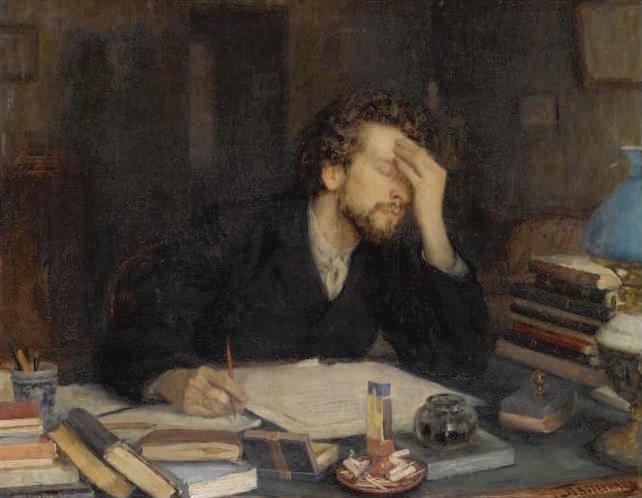
Leonid Pasternak’s “Throes of Creation”

Writing’s always fun when you have something to write. But when the well runs dry, you might find that you’ve got writer’s block.

But what is writer’s block? Is it even a real phenomenon? And if it is, what can we do about it?

As the late Sir Terry Pratchett once said, “There’s no such thing as writer’s block. That was invented by people in California who couldn’t write.” Okay, possibly. But I think there’s also a common misconception about writer’s block in general: that it’s a condition where you are literally incapable of writing. I don’t believe in that either, Terry.

I do believe, however, in writer’s stump—and I’m not talking about trees. Writer’s stump means you just get stumped—like on a math problem, or with a difficult riddle. It happens to every writer, probably even Terry Pratchett.

So what can we do about it? Here are a few ideas.

1. Try Working on a Completely Unrelated Project

For me, this method works really well. I think that’s because I remain in the writing state of mind, even though I’m not working on my main project.

To get started, try writing something completely new, like a flash fiction piece or a short story. You could even try writing about how difficult it is to think of something to write, so long as you’re putting something on the page/screen. You might find that it changes your mindset from I can’t write to I’m struggling with this particular piece right now, but I’m still a good writer.

The other side of this coin is just stepping away from writing entirely—but just for a little while, I hope. If you’re feeling especially enraged about your writing, Nicolas Cage-style, then you might want do something else for a while.

2. Look to One of Your Favorite Works for Inspiration

I find this one either works really well or just pisses you off (Cage-style pissed? See previous paragraph). For example, I might pull my hardcover of American Gods down from the shelf, pick a random paragraph, read it, and say to myself, “Wow. When I grow up, I want to write like that.” And then, hopefully, I’ll go back to my piece with a smile and newfound inspiration.

Or, on another day, I might read the same random paragraph and exclaim, “Wow. When I grow up, I will never, ever be that good. Woe is me.”

Your reaction to this method will probably depend on your temperament or what kind of mood you’re in on that particular day. Be careful with this one.

3. Look Back at Something You’ve Already Written

Similar to number 2, but try it with your own work. I would suggest picking something you wrote a while ago and were always very proud of, but haven’t looked at for a while. That way, you might surprise yourself with some especially crackling pieces of dialogue, or a beautifully-written image.

This one is especially effective because writer’s stump is often just a symptom of self-doubt. You get stuck, which makes you wonder if you’re actually a good writer, and suddenly, you have no good ideas anymore. By looking back at a good piece, you’ll see that you’ve already written some amazing stuff, so there’s no need to feel like you can’t write.

Or, for a little fun, try revisiting a piece you wrote when you first started  writing. I did that once, and it was awesome. You come out of the experience realizing that you’ve improved a ton more than you might realize.

4. Ask yourself, “What is this piece really about?”

This, like the other tricks I’ve mentioned, is certainly not foolproof. But it’s one of my favorite techniques. If you sit back and look at your story as a whole, not just as one event leading to the next, you might spot the way out of the stump you’ve gotten yourself into.

I think Stephen King sums this method up perfectly in his nonfiction masterpiece, On Writing. He describes a particularly nasty case of the block when writing The Stand thusly:

“I liked my story. I liked my characters. And still there came a point when I couldn’t write any longer because I didn’t know what to write…I circled the problem again and again, beat my fists on it, knocked my head against it…and then one day when I was thinking of nothing much at all, the answer came to me…If there is any one thing I love about writing more than the rest, it’s that sudden flash of insight when you see how everything connects.”

Just taking a step back and looking at the big picture sometimes makes all the difference.

5. Grind it out!

This method isn’t for everyone, but I think it’s worth a try sometimes. If you’re writing a novel and can’t think of a way to get your character from Point A to Point B, just plop her/him at Point B and figure out the “how” later. You might find that the answer comes to you as a result of your subsequent writing. Furthermore, this avoids the blank-stare-at-the-screen-or-page moment, which just leads to more of the same.

Closing Thoughts…

The stump/block, in the words of Arnold Schwarzenegger, is one ugly you-know-what. Thankfully, there are many ways to defeat it. I’m certainly no expert, but I like to write about writing and the methods I’ve listed here sometimes work for me. How do you fight the block? Feel free to leave your favorite techniques in the comments below.

And keep on writing!


Kyle A. Massa is a speculative fiction author living somewhere in upstate New York with his fiancee and their two cats. His stories have appeared in numerous online magazines, including Allegory, Chantwood, and Dark Fire Fiction.

[mc4wp_form id=”4914″]

The Curious Case of Why Short Story Collections Don’t Sell

Short Story Writer

“Short stories are loose change in the treasury of fiction.”

That’s what J.G. Ballard wrote in the introduction to his Complete Short Stories collection. Considering the dwindling attention spans of many readers, you’d think that short stories would be more popular than ever. But when’s the last time you saw someone reading a short story collection? Just like Ballard wrote, it seems short stories are the pennies, nickels, and dimes of literature.

So why don’t short stories sell?

First, I think it’s about the characters. Take a series like A Song of Ice and Fire, for example. Fantasy fans and non-fantasy fans alike revere that series in large part because of the characters. They’re dense, they’re layered, and they evolve over the course of many volumes. In short stories, however, you don’t have hundreds of pages to devote to character development. That’s not to say that short stories don’t have good characters—it’s just that, with such limited space, writers must focus on a few key characteristics rather than many.

Furthermore, I think agents and publishers are less likely to go for collections because they don’t have the potential for a series. This one’s a no brainer: once readers get attached to the first book in a series, you’ve got them locked in to buy the rest. The Harry Potter series, for instance, only got more and more popular with each new release. And once the series ends, publishers can package the whole thing into a box set for even more sales. All told, that’s a heck of a lot of money.

And another thing: authors often use short story collections to explore different styles and genres, which is the opposite of what they do with novels. Another truism of the publishing industry states that once an author makes it big with one book, she/he should pretty much rewrite that story, only make it a little different this time. For readers, this is a good thing; you can pick up a novel by an author you know, and you’ll probably end up liking it.

Short stories don’t necessarily follow that rule, though. Things like second person narrative and interview style, which rarely work in long-form narratives, suddenly spring to life in a short story. Authors also tend to explore subjects they stray away from in their longer fiction. Roald Dahl is a great example. Sure, you know him as the guy who wrote James and the Giant Peach and Charlie and the Chocolate Factory. But have you ever read his short fiction? Just to get a taste (sorry for the pun), try Lamb to the Slaughter. It’s a clever short that includes murder, adultery, deception, and dinner.

Or, in other words, good fun.

Will short stories ever sell like novels do? Maybe not. Historically, the novel has always been far more popular, and, for the reasons listed above, I can see that trend continuing for a long, long time.

But don’t let that stop you from trying short fiction, if you haven’t already. There’s an elegance to a good short story, a brevity and directness that many novels are missing. Some of the greatest short stories I’ve ever read say much more with far less.

So, for J.G. Ballard’s sake and the sake of short story writers everywhere, always hold on to that loose change.


Kyle A. Massa is a speculative fiction author living somewhere in upstate New York with his wife and their two cats. His stories have appeared in numerous online magazines, including Allegory, Chantwood, and Dark Fire Fiction.

[mc4wp_form id=”4914″]

5 Ways to Excel at Taking Criticism Poorly

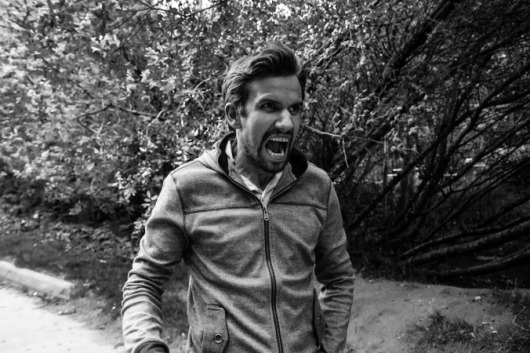
Angry Dude

This is a good start.

Let’s get one thing out of the way: Very, very few people enjoy taking criticism. It’s not fun to spend hours of your time on a piece that you really like, only to have someone point out all the things they didn’t like. In fact, sometimes it can be downright discouraging.

But let’s not get discouraged. Because any writer will tell you that the first draft is always going to stink. Which means that the feedback you receive is invaluable to your writing process. Without it, you can’t improve.

Still, there are those out there who just can’t take criticism. If you want to be one of those wonderful folks, here are five great ways to excel at taking criticism poorly.

1. Treat Every Comment Like a Personal Attack

Whenever you get negative feedback, assume that it isn’t directed at your piece—it’s directed at you. When a reader says your character acts like a dick in that one scene, don’t be fooled. The reader thinks that you are the dick.

Make sure to act appropriately mad or hurt, matching the ostensible nastiness of the comment made. This informs your readers that you’re taking everything personally, and that from here on out, you’re going to continue to do so.

Some helpful retorts to try:

  • “I don’t think you know what you’re talking about.”
  • “Wow, tell me how you really feel.”
  • “Well, I think I don’t buy you as a character.”

This is a great way to ensure that you’ll receive cautious, unhelpful comments from your group members.

2. Whenever Possible, Explain Why Everyone Else is Wrong

When receiving feedback, you’ll oftentimes find that your readers just don’t understand you. They can’t comprehend your wit, your subtlety, and your mastery of the craft. So when readers tell you they don’t understand what’s going on in chapter two, kindly explain that, “It’s not me. It’s you.”

Furthermore, make sure to pontificate on every subtlety of the work, just in case people aren’t getting it. Always be sure to explain, in excruciating detail, the symbolism behind each character’s name, your inspiration for the story, the ways in which you’ve outdone all the other writers in the genre, and so forth. People will love it.

3. Assume That No One Else Knows What They’re Talking About

First thing with this method: make sure to always have a notebook. No no, don’t write anything down. Think of it more as a prop.

Leave your notebook open. Keep your pen hovering just above the page, but don’t use it. This sends a clear message to your readers: nothing they say is relevant to you, so you won’t even write it down.

Unless they compliment that metaphor you had in the first paragraph. Go ahead, write that down. Compliments are totally useful. Everything else is nonsense.

This, in general, is a great rule to live by if you want to push people away. Everybody loves a know-it-all, right?

4. When Readers Offer Feedback, Just Talk Over Them

Monologues work fabulously with this method. Feel free to use the following as a template.

“What’s the point of criticism, anyway? To quote Ringo Starr, I’m the greatest. So of course I know that all the adverbs I’m using are completely necessary. And if I’m not using two to four adjectives per noun, then I’m sure you just won’t get the picture.

“What’s that? You think the flow of the sentences is disrupted by all the adverbs and adjectives?

“I’m sorry, have you ever read Shakespeare? Well I read Hamlet in high school, and let me tell you, that guy uses lots of adverbs and lots of adjectives. And he’s the Bard. So that means I’m right. And you’re wrong.

“Anything else?”

5. Allow Every Piece of Criticism Destroy Your Confidence in Your Work

You’ve worked for so long on this piece, and now that you know everything that’s wrong with it, you know the truth. It’s not even worth saving! On to the next one, right?

Don’t spend time trying to fix it. Sure, you could probably take the advice you’ve been given and make your piece better than it was, but why do that? This thing is more tragically flawed than Prince Hamlet.

So go ahead. Throw it out. Start over. Ask for criticism not because you want to make your piece better, but because you want affirmation that it’s already the best.

Congratulations on a bad job well done. It’s not easy taking criticism this badly, but together we can do it. Bonus tip: getting visibly angry always works when these other methods fail.


Kyle A. Massa is a speculative fiction author living somewhere in upstate New York with his fiancee and their two cats. His stories have appeared in numerous online magazines, including Allegory, Chantwood, and Dark Fire Fiction.

[mc4wp_form id=”4914″]

Has Your Antagonist Stolen Your Story?

Protagonist: the character who propels your story forward. Usually the main character. Antagonist: the character who impedes that forward progress. Usually a supporting character. Seem simple enough. Except when it’s not.

What if your antagonist is more compelling than your protagonist? Contrary to conventions, what if your villain feels more like the main character than your main character does? What if it feels like your antagonist has stolen your story?

Let’s look into some answers to these questions.

Option 1: Improve Your Protagonist

If your antagonist is a 10 out of 10 and your protagonist only a nine, it’s time to turn the latter up to 11. In other words, maybe it’s not that your antagonist has stolen your story. Maybe your protagonist just needs to be a little stronger (or louder, as it were).

Voldemort

This imbalance is sometimes caused by focusing too much on building likable main characters. Since we most likely want readers to root for our protagonists, they can turn into types rather than individuals. Traits like courage, resourcefulness, and fairness are great. But they can also be a little boring all by themselves.

If your protagonist feels uninteresting, try adding flaws. These tend to create internal conflict, which builds good characters.

For instance, imagine you’re writing a heroic protagonist. We’ll call her Solara (after one of my cats). Since you want Solara to be likable, you write her as a kind, intelligent, capable character. Whenever she encounters a challenge, she succeeds. Although Solara sounds like an awesome person, she’s not a particularly interesting character. Pretty much any antagonist you set against her will overshadow her.

Instead, let’s add a flaw. What if she succeeds all the time, yet fails for the first time when the world needs her most? How does she react to that? How does she live with herself?

By adding this simple flaw of overconfidence, we’ve enhanced our protagonist greatly. Doing so returns her to the forefront of the story, which simultaneously reclaims some mojo from your antagonist.

Option 2: Shift the Focus of Your Story

If you feel your antagonist is the best character in your manuscript, it’s entirely possible that your antagonist should’ve been the protagonist all along.

Gollum

But in the words of Treebeard, don’t be hasty. Agonize over this decision before you make it. Sometimes it’s exactly what your manuscript needs. Sometimes it means months of work with little (or no) payoff.

Furthermore, this solution is rarely correct because an author’s instincts are rarely wrong. You know your story better than anyone. Therefore, if you decided to tell it from your original protagonist’s point of view, that’s very likely to be the correct decision. Because when it comes to writing, initial inclinations are usually right.

Bottom line: This solution works, though not as often as you might think. Consider it, but don’t expect it.

Option 3: Accept It

The Joker

Stories are best when conventions are broken. So maybe it’s alright for your antagonist to be more compelling than your protagonist.

The Dark Knight provides an excellent example. This film came out when I was in high school and became an instant hit. I myself saw it three times in theaters (and nearly a fourth, that time in IMAX). Everyone saw it. I remember the conversations about it vividly.

No one talked about Batman. Everyone talked about the Joker.

On its face, that might sound backward. The film isn’t called The Joker, after all. Shouldn’t Batman be the character everyone’s talking about?

Not necessarily. Ultimately it comes down to the story you’re writing. The Joker’s popularity works because villains are an essential ingredient of comic book films. In addition, the Joker himself is one of the most famous antagonists there is. Making him the emphasis of the film works, and works well.

Will the same work for your work? As with all of these tips, you’re the best judge. Figure out what’s best for your story, your protagonist, and your antagonist, then act. Because no one knows your story better than you!


Kyle A. Massa is a speculative fiction author living somewhere in upstate New York with his fiancee and their two cats. His stories have appeared in numerous online magazines, including Allegory, Chantwood, and Dark Fire Fiction.

[mc4wp_form id=”4914″]

For Writers, Hoarding Ideas Is a Big Mistake


We all do it, even though we probably shouldn’t. It’s that thing where we say to ourselves, “I’m saving this idea for my next story.” Or, “That character isn’t entering until the third book in the series.” Or, “I had this great idea for a line of dialogue, but I’m keeping it for the project after next.”

As writers, we all hoard our ideas from time to time. And I think we should all try to do it a little less. Here’s why.

Hoarding Makes Ideas Less Fresh

Let’s say you’ve got an idea you’re really excited about. Maybe it’s a character, a setting, a plot point. Whatever it is, it’s a fresh idea. Why allow it to go stale?

That’s what we do when we hoard ideas. Stephen King wrote this in the classic On Writing and I agree—ideas come out best on the page when we’re most excited about them. So if an idea intrigues you, I say go for it. Don’t allow those fresh ideas time to cool off.

Hoarding Assumes We Won’t Have New Ideas

Hoarding food in preparation of the impending zombie apocalypse makes sense. Good eats are going to get scarce once the zombies shamble into town (unless of course, you are a zombie yourself). By its very nature, the act of hoarding implies scarcity. But unlike food, ideas are completely renewable resources. When we hoard them, we’re forgetting that fact.

We’re writers, right? We make stuff up for fun or work (or both), then we pour our imaginations onto the page. Just because we haven’t thought of the next idea yet doesn’t mean we never will. The idea will present itself to us when it’s ready. So let’s not get into this scarcity mindset.

Hoarding Can Limit Quality

Let’s say you’re writing a trilogy. You want books two and three to be just as good as book one, so you save some of your best ideas for the later two volumes.

My question is, do you still have enough good ideas for the first book? Because if you extract concepts and inject them into the later volumes, you might be left with a rather shriveled first book. Not a good place to be. Readers are highly unlikely to complete a series when they don’t enjoy the first entry. And if readers don’t make it to your sequels, they’ll never enjoy those great ideas, anyway.

Focus on making your current project the best it can be. Cross future bridges when you come to them.

In Conclusion

Sure, sometimes ideas must wait. For structural reasons, you might not be able to include every great idea in every story you’re currently working on. But if you have a great idea and you can incorporate it into the story you’re working on now, I say go for it. Now is the time!


Kyle A. Massa is the author of the novel Gerald Barkley Rocks and the forthcoming short story collection Monsters at Dusk. His stories have appeared in numerous online magazines, including Allegory, Chantwood, and Dark Fire Fiction. He lives somewhere in upstate New York with his wife and their two cats.

[mc4wp_form id=”4914″]

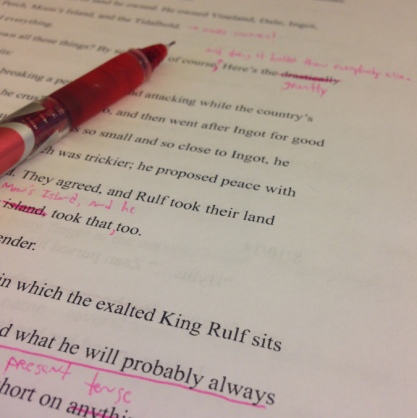
Proofreading Tips for Writers

Proofreading

If you want people to read your stuff, it usually helps to make sure it’s readable. That’s why proofreading is so important.

Submitting a messy manuscript is like showing up to a job interview in shorts and a hoodie. And if you’re trying to collect feedback from your writers group, friends, or family, they’re going to have a tough time focusing on the writing when all they notice is that you’re using the wrong “their.”

With that in mind, here are some proofreading tips that work for me. Hopefully, they can work for you, too.

Print It Out

If you do your writing on a computer, try printing your piece and editing right on the page. I’m not really sure why, but I tend to catch way more mistakes on a physical page than I do in a word processor. Plus, you can handwrite your edits directly onto the paper, which makes you look like a serious and dedicated writer to anyone passing by.

Be Patient

When I’ve got a piece I’ve dedicated a lot of time and thought to, it’s tempting to send it out immediately. It’s exciting, after all, to think that someone might read it and love it as much as I do. It’s tempting, but don’t jump the gun. Sit on it a while.

Allow yourself ample time to review your piece. Come back to it a day later, and then a week later, even a month later. Doing so will give you some much needed distance. Oftentimes, you’ll come back to your piece, cringe, and then ask yourself, “Why the hell did I write that?”

Be Critical of Everything

When you’re proofreading, don’t just look for spelling and grammar mistakes. Those are important to weed out, but proofreading gives you the opportunity to refine your style as well. Are you repeating certain words over again? Are you varying your sentence structure? Is your tone consistent throughout?

One way to be critical is to treat your piece like it’s not your piece. Pretend that you’re an editor and that you’ve been given a stranger’s manuscript, and it’s up to you to make it better. Doing so gives you the distance you’ll need to make those necessary cuts.

Sometimes it hurts to hit that delete key, but in the words of George Orwell, “If it is possible to cut a word out, always cut it out.” ‘Nuff said.

Ask Someone to Read Your Piece Back to You

This is probably my favorite method of proofreading. It helps to have the text in front of you as well, so you can follow along and mark down any errors either of you spot. Since your reader must pay extra attention to the text in order to read it aloud, he or she will be more likely to pick up on mistakes. And since you’re hearing it, you will too.

Take notes on where your reader struggles. If he or she has to go back and re-read a passage, there’s a good chance that passage needs some work. Likewise, note where your reader thinks you’ve succeeded. For example, if you have a line that supposed to be funny and your reader laughs at it, that’s a pretty good indicator that you’ve gotten your point across.

Use Your Computer’s Voice Command

Let’s say you don’t have anyone around to read your work to you. No problemo—we live in the 21st century, after all. Have your computer read to you!

On a Mac, head up to System Preferences, then click on Dictation & Speech. From there, choose the key combination you’d like to press to have the computer read your work (mine, for example is Command+Alt+S). Now head back to your document, highlight the desired text, hit your keys, and there you have it. Your computer should read whatever you highlighted.

I’m a big fan of this feature because sometimes, even when I read a piece many times over, I’ve still got errors. Fortunately, when I hear the work read aloud, I tend to hear things like redundancies and duplicate words that I might not otherwise notice.

What Else?

How do you proofread your work? Do you have your own secret methods? Maybe a sweet computer program I haven’t listed? Post it in the comments!

Lastly, if I’ve made any proofreading errors in this blog, shame on me.


Kyle A. Massa is the author of the novel Gerald Barkley Rocks and the forthcoming short story collection Monsters at Dusk. His stories have appeared in numerous online magazines, including Allegory, Chantwood, and Dark Fire Fiction. He lives somewhere in upstate New York with his wife and their two cats.

[mc4wp_form id=”4914″]

What To Do With a One-Star Review

one star review

I recently received my first one-star review. This was my reaction:

Nah, just kidding. I was pretty bummed at first, but now that I’ve had time to think about it, I have some fresh thoughts. In this post, we’ll discuss ways to make something good out of a bad review.

Write About It

…But please don’t write a scathing hit piece against the reviewer. Remember, every review is valuable, even those with one star. Instead, it might help to write a piece that helps other writers going through the same thing.

Okay, I know this sounds a little like a support group for something that isn’t that bad. It’s just a review. However, bad reviews sting, and they can be jarring blows to your confidence. So do what you do best. Write about it.

Give others tips on how to overcome their disappointment. Discuss ways to do something positive with a negative. That can help turn things around.

You might even take this one step further and use it in your next story. Every experience can contribute to fictional work, so keep this one stored away. Write about a writer who’s struggling to move on after receiving bad reviews. Or, more generally, apply this feeling to a character who’s experiencing momentary failure.

Remember That Everyone Gets Them

Really. Everyone. Here’s a review for Margaret Atwood’s latest:

Here’s another for J.K. Rowling’s Harry Potter and the Sorcerer’s Stone, one of the most successful novels of all time:

And even the master of horror himself, Stephen King:

It’s just like mom said: You can’t please everyone. Your carefully crafted plot twist is going to be labeled predictable by some readers. Your favorite character is going to be someone else’s punching bag. Your most intricate passage is going to feel unwieldy to a less patient reader.

It’s the nature of art to be controversial. If everyone feels exactly the same way about it, then maybe it’s not doing its job well. Some of the most enduring stories are those that people argue about.

For example, consider the latest Avengers film. Without giving anything away, let’s just say that Marvel Studios made significant changes to some of its most beloved characters. Some people liked it. Some didn’t. Yet even those that didn’t are joining a conversation about the film. And that’s a good thing.

Consider the Aggregate

If I may take an example from my cardboard addiction, Magic: The Gathering, consider the aggregate. In Magic, if your goal is to win every match, you’ve set an unrealistic expectation for yourself. Even Jon Finkel, the Michael Jordan of Magic, wins only about 65 percent of his games. So if you can’t win every match, what should be your goal?

In Magic, the goal is not to win, but to increase your percentage chance of winning. The best players in the world squeeze out that additional one percent of win likelihood, which doesn’t sound like much, but really is. Over the long term, that extra one percent could be the deciding match in a championship game, or a difficult-to-navigate situation most other players would lose. Percentage points are what separate good players from the greats.

The same goes for reviews. Even if that one-star review feels like a loss, your skill will be shown in the overall record of your book. The aggregate scores will drown out some of the worse ones, and overall, you’ll find success.

Summing It Up

One-star reviews are hard to stomach in the moment. Give yourself time to be sad about them, but then move on quickly. Find something positive to do with that negative review, and then do it. It will be a huge help in the future.


Kyle A. Massa is the author of the novel Gerald Barkley Rocks and the forthcoming short story collection Monsters at Dusk. His stories have appeared in numerous online magazines, including Allegory, Chantwood, and Dark Fire Fiction. He lives somewhere in upstate New York with his wife and their two cats.

[mc4wp_form id=”4914″]

An Excerpt from “Monsters at Dusk”

Monsters at Dusk

For the past five months, I’ve been working on a new book. Today, I’m thrilled to share a piece of that book with you.

Just to be clear, this is a real thing (not like that April Fool’s joke a while back). It’s a short story collection and it’s called Monsters at Dusk. About 40% of the book is comprised of previously published short fiction. The other 60% is original material.

As the title implies, this collection is all about monsters. They range from real to imaginary, folkloric to original, and literal to figurative. The “dusk” part refers to the transitional state of all these monsters; each undergoes a significant change. (Also, I think Monsters at Dusk just sounds cool.)

In the coming weeks, I’ll share story titles, the book cover, and further information about the collection. For now, I’ve got an excerpt for you.

This sneak peek comes from a story called “The Megrim.” Weighing in at nearly 20,000 words (or 75 Google Doc pages), “The Megrim” is the collection’s lengthiest piece. I began writing it late last year while concluding edits on Gerald Barkley Rocks. It was one of those rare instances where I simply started writing without any specific story in mind. I imagined a snow-covered village, a bookish priest, an always-hungry mercenary, and a mysterious monster lurking in the woods surrounding them. The name of that monster came to me immediately: The Megrim.

“Megrim” is not a made-up word, by the way. I first heard of it here:

Megrim

Anyone who knows me knows of my love for the OG trading card game, Magic: The Gathering. One of the game’s most underrated elements is its use of language; there’s no shortage of obscure and interesting words in card titles. With names like “Avaricious Dragon,” “Abhorrent Overlord,” and “Immaculate Magistrate,” the game has no shortage of evocative words. So when I discovered “Megrim” wasn’t copyrighted, I stole it.

Not only did the word sound right for my monster, its definition aligned as well. According to the New Oxford American Dictionary, megrim is an archaic noun that means “depression” or “low spirits.” (Megrim also refers to “a deep-water flatfish of the European Atlantic coast,” but we’re not talking about that.) The words fit the monster, and so its title—and the story’s—were decided.

From there, the initial ingredients mixed together to form an epic fantasy/mystery hybrid, with a bit of horror sprinkled in. I loved writing it. In my (admittedly highly-biased) opinion, it’s the best story I’ve ever written.

So, without further ado, I give you an excerpt of “The Megrim” from the collection Monsters at Dusk. If you’d like to read the entirety of both, make sure to check back in the coming weeks for the official release date. Enjoy!


The Megrim

by Kyle A. Massa


1

When the first child vanished in the night, I called on the High Temple for aid.

Piebald the Cobbler laughed at me for doing it. “You’re always worrying, Pureman,” he said the following day as we trudged over fresh snow. “Too much for a young man like you. These children, they go wandering, they come back. I’ve got a boy of my own, you know. Once this one starts missing his sweets and his bed, he’ll return.”

Yet a day passed without sign of the child.

Halfmoon was his name. He had a permanent smile and a skill for mimicry. His imitations of Asrith the Librarian, Glubb the Builder, Murple the Veteran, and myself always drew laughs. Our little town felt colder after his disappearance, and not only due to the constant snowfall.

Each day I awaited a response to my message from the High Temple. Though I sent my fastest bird as courier, there were many leagues between our village of Greengrove and, well, anywhere. What’s more, we were surrounded by the Creaking Wood. Had my bird fallen prey to some creature of the forest? An owl? A hawk? Or something worse? Each day I waited. Each day I worried.

The second child disappeared three nights after the first. Her name was Zel and she was Bregna the Butcher’s daughter. She used to cry when her mother cut meat because she pitied the dead animals. I inspected the ground outside her home for tracks, but the night’s snowfall left nothing behind.

“I know who took them,” Pia announced one afternoon while we prepared the Temple for evening prayers. She was my apprentice, a girl of 11 with a sharp mind and a sharper tongue. “Obviously, this is the work of a cannibal. Probably likes the meat from the young ones. It’s more tender, I’d wager. Easier to mince.”

I tipped my head to the sky. “My apologies for her morbidness, Goddess. She reads too many fictions.”

“Not so many as you,” Pia snorted. “When will you tell the Goddess I’m ready to be a Purewoman? You said I was the other day.”

“I did. Though I believe I used the word ‘soon.’”

“Soon. Maybe. Someday. Never. When adults say them, they all mean the same thing.” She sighed. “Who do you suppose took the children, then?”

My gaze drifted out the window to the trees beyond. “I am not certain we’re dealing with a ‘who.’”

The snow fell, our village of Greengrove slept uneasily, and the next morning, my bird returned bearing a note. It was sealed with the mark of the High Pureman.

For Pureman Wendyll, it read on the outside. On the inside: Help is on the way.

#

2

A woman strode into Greengrove three days later. When she saw me, she spat.

I was certain she was a woman, yet she had the frame of a man: broad in the shoulders, thick in the arms, legs of solid rock. Her smile revealed several missing teeth. Her black hair was shaved on either side but lengthy down the middle; it formed a braid that hung to the small of her back and appeared heavy enough to double as a whip. She wore two axes, the heads of which peaked over either shoulder like stern metallic faces.

Again, she spat. I cannot say it was the best first impression.

The woman’s next action, after the spitting, was to squint at me with a combination of curiosity and distaste. “Is this Greengrove?”

“It is,” I replied. “Are you journeying to the capital?” I loved my town, but I had no illusions of its appeal to outsiders (or lack thereof).

“Been there before. It reeked. You the Pureman here?”

“I am. Wendyll is my name, Pureman Wendyll. And you are?”

The woman extended a hand. The hand was missing a pointer finger. That gave us something in common, for I too was missing fingers. Three, from my right hand.

“Name’s Nairn Lockwood,” she said. “Sent by your High Pureman to solve your little mystery.”

Nairn Lockwood. Nairn. Lockwood.

I’d heard the name before—or rather read it. Nairn Lockwood was a mercenary from distant lands who’d fought battles and liberated prisoners and dared to accept missions no sane person would take. Nairn Lockwood was the subject of countless books ranging from fact to fiction to somewhere in between. Nairn Lockwood was called Life-Ender, All-Warrior, Death-Blessed, and, for reasons I’d never discovered, No-Leftovers.

Nairn Lockwood was, in a word, legendary.

“Forgive me,” I said, taking her hand and shaking it. “I had not expected…”

“What? A woman? And an ugly one at that?” Her laugh sounded like a boot scraped over gravel. “And I hadn’t expected a schoolboy in a holy man’s robes. How old are you, Pureman? Eleven?”

“One and twenty,” I said, forcing a smile. “You misunderstand me. I had not expected the Temple to send someone of your reputation. Is it true you defeated the Champion of Luxdale in single combat?”

“Aye,” she said, dipping into a pocket and retrieving a strip of dried meat. She chewed, swallowed. “Thrice. I killed him, then someone claimed his sword and called himself the new Champion of Luxdale, so I killed him too. Then a third one named himself Champion—killed that one next.” She squinted at the sky. “Hmm. Was there a fourth one in there? Can’t recall.”

“And the conflict in the Nightlands. Did you truly negotiate the peace yourself?”

“More’s the pity. That war was good fun. But Empress What’s-Her-Name offered me thrice my weight in gold. And if you haven’t noticed, I’m a hefty lass.”

“And what of the Ventillion Mystery?”

“Wasn’t much of a mystery,” she mumbled through a mouthful of jerky. “Not after I solved it.”

“And now you’re here.” I pursed my lips. “Which I’m happy for, truly happy, but…isn’t this job a bit mundane for someone of your reputation?”

Lockwood said nothing. She only stared at me. The sound of wintry wind spoke for us.

“Lady Lockwood? Did you not hear me?”

“I did. But I don’t answer stupid questions. Now…” She finished the rest of her jerky in three titanic bites, then plunged her massive hands into her coat. “Shit on a brick, where’s that damn writ? Supposed to get me free lodging. And more important, free food.” (By now I was beginning to understand the “No-Leftovers” title.)

I inclined my head. “I’ll take your word for it, Lady Lockwood.”

“Oh no. No more of that ‘Lady’ shit. Lockwood is fine enough. Say that.”

“Lockwood, then. We thank you for coming.”

“Aye, whatever. Now where’s the dead boy?”

I blinked. “Girl. The latest is a girl. There are three of them in total: First a boy named Halfmoon, then a girl named Zel. And a third one just last night. My…my apprentice. Pia.” I swallowed down tears—I’d cried enough of those already. “They’re not dead, Lady—I mean, Lockwood. They’re only missing.”

“If you say so. Show me where the last one disappeared.”

“Her home? I think it best not to disturb the family at a time like this.”

“Do they want the boy to be found?”

“Girl. She’s a young girl.”

“Whatever. Do they want her found?”

“Beyond a doubt.”

“Then I’ll do some disturbing. Lead on, Pureman.”

Reluctantly, I led her through the streets (well, street) of Greengrove, to the home of Pia and her parents, Lara and Lorn. Our houses and shops were buried in snow, yet still I knew them: the leaning old library, Bregna’s box-shaped butcher shop, Glendon Glubb’s small abode, Mollo Murple’s even smaller one. And, rising above them all, the looming bulk of Lendo the Versatile’s mansion.

We reached the house a minute later. It was a modest dwelling, humble even for our little slice of the world. We stood on the edge of the village, mere yards from the trees of the Creaking Wood. Their bare branches reminded me of exposed bones. I dared not look too long.

“Here. This is Pia’s home.”

“‘Is’? You speak of this girl as though she’s still alive.”

“I pray that she is, and the others. The Goddess shall protect the young and innocent. I’m sure of it.”

Lockwood spat, then produced a blue sphere from another hidden pocket. “The Goddess protects nobody and nothing. In my experience, missing is usually dead. Cockatrice egg?”

I shook my head. Lockwood shrugged, then cracked the shell upon her knuckle and slurped the contents. “Mmm. I like them raw. Toughens the tummy.” She tossed the remains aside, approached the house, and thumped the door.

I hurried after her. “Pia is a curious girl. Insatiable. No matter how much she knows about a subject she always wants to know more. She reminds me of myself in that way. One day she’ll lead a Temple, and I’m sure she’ll do a better job of it than I have. She’s a kind child, a resourceful child, and she’s only just gone missing. I do hope you’ll be soft with her parents. This is a trying day for them. Will you promise me that?”

I stared at the mercenary. She stared back at me.

She said, “Sorry, did you say something? I wasn’t listening to any of that.”

The door swung open to reveal a woman and a man. The woman had thin lips and hair like straw. The man had a round belly and no hair at all. Both had red-rimmed eyes.

Lara and Lorn. Pia’s parents.

“Pureman,” said Lara, inclining her head. She then regarded Lockwood.

“This is our investigator,” I explained. “Nairn Lockwood. She’s come to help us find Pia.”

“Greetings. You know the name. A pleasure to meet me, I’m sure. Yes, all the stories are true. By chance do you have any pickled basilisk tongues? I’m fresh out of snacks and still feeling a bit peckish.”

Lara and Lorn gaped at Lockwood as though she was a speaking bear. “We…no. We have none.”

Lockwood shrugged. “Show me the last place you saw her.”

The couple led us through their house. It was a compact space, just a common area, two bedrooms, a hearth. The floorboards groaned with each step Lockwood took.

“Pia’s room is here.” Lorn pointed to a door, and then he began to weep. That made his wife weep, and together they excused themselves.

“Why do the bereaved always start crying before I can ask them questions?” Lockwood muttered.

I frowned at her. “Have you no compassion?”

“Com. Pash. Un.” She shrugged. “Never heard of it.” She pushed me aside and pressed into the room.

I am not a large man but Lockwood is a large woman. In that room there was barely enough space for us both. The window stood ajar, a detail which was common to all three disappearances. I relayed this information to Lockwood. “No noise in the night. No evidence of forced entry, not with any of them. Only open windows, like this.”

Lockwood poked her head out the window. She looked left, right, up, down. She turned, leaned over the child’s bed, and sniffed. “Are we to assume nothing’s been touched since last night?”

“I believe so.”

“Then look at the sheet. Tossed aside as if she rose from bed for a late-night pastry.”

“What are you thinking?”

“I’m thinking about thinking. Hush.” Her eyes bounced about the room: the bed, the door, each wall, back to the window. They stopped there. “A sleeper would have a clear view out that window, yes? Don’t answer that—I’m thinking aloud.”

She wasn’t wrong. From her bed, Pia would see…

“…The Creaking Wood,” I murmured.

“Aye. That.” Lockwood poked at a gap in her teeth with her tongue. Then she sprang to the bed and dove under the sheets.

“Lockwood!” I cried. “What in the name of the Goddess are you doing?”

“Putting myself in the victim’s shoes. Somewhat literally. Children don’t wear shoes to bed, do they?”

“But—but you’ll corrupt the scene.”

“Or I’ll have a sudden epiphany. Perhaps both. Now move, Pureman. You’re blocking my view.”

She was here to solve the mystery, I reminded myself. She was here to find Pia, and Zel, and Halfmoon. The High Pureman sent her to save our poor children. If she could do that, I could endure her rudeness. I released a breath, then stepped aside.

Lockwood stared out the window at the trees beyond. “I’m a little girl,” she chirped. “Imagine I’m just an innocent girl dreaming of candy and sunshine and whatever the hell else the little shits dream of. I’m dreaming, dreaming, and then—ah! Who’s that at my window? Pureman, stand outside the window for me.”

“What? Whatever for?”

“For the sake of authenticity. I must needs visualize the event, and you seem the sort who lurks outside rooms at night. I’m asking nicely.”

I don’t believe she was, but I stepped through and hauled myself outside anyway. “Does this suffice?”

“It’ll do.” She took a moment to consider me. “Are you sure of your age, Pureman? You still look like a child to me.”

“Now probably isn’t the time for such talk, Lockwood.”

“Very well, child. Knock on the window.”

“Knock? Why must I knock?”

“Must you question my every order? Just do it!”

I knocked on the window.

“Not so loudly, you dolt. You’ll wake the girl’s parents and be found for the villain you are.”

My face turned red. I do not often feel anger, but at that moment, it surged through me. “I did not commit this terrible deed!”

“Perhaps not, but you’re acting. You know of actors, yes? You have one here in town, I hear? Actors pretend, and so must you. Softly, please.”

I knocked. Softly. Lockwood nodded to herself. She rose, feigned drowsiness, then tottered to the window and climbed out, just barely squeezing through the frame. She stood there next to me and pondered. She stroked her chin with a finger—or would have, if the finger had been there.

“Sheets tossed aside, window unlatched, nothing broken, nothing heard. I do believe our girl went willingly to her captor.”

A fine observation, yet one I’d already deduced with the previous two disappearances. I informed her of this, and she glared at me.

“Fine then. A step further. I believe we’re looking for someone from your town, likely an older, charming presence. Someone others admire and respect. This is no stranger nor monster—this is someone the girl trusted, and trusted well enough to approach in the dead of night. What’s the population of this place?”

“Forty nine,” I said. “Or 50, if you count the babe in Lady Lobell’s womb.”

“That’s our list. Next comes a process of elimination. I suppose we can start by scratching off the babe.”

“But can you be certain we’re dealing with a human?” I countered. “Could it not be something more…supernatural?”

“Supernatural?” Lockwood made a face like I’d just removed my clothes and rolled in the snow. “What’s your evidence, Pureman? A sign from your Goddess?”

I pointed downward. Lockwood followed my gesture. Her eyes widened.

“Ah,” she murmured. “Interesting.”

Tracks. Tracks in the snow beneath our feet. Jagged, splayed shapes, monstrous and strange. Seven toes on the left foot, six on the right. Though our own tracks intermingled with them, these were significantly larger—perhaps two or three times the size. I had seen the tracks of the wyvern in a volume from the library, and the gray lurt, and the five-eyed lizapog. These tracks belonged to none of them. This was something much larger—and plainly not human.

I must admit, I relished the shock on Lockwood’s face, however briefly. “We townsfolk already tried following them,” I said. “They become lost among the underbrush of the forest. Yet their presence reinforces my theory. This was no human. This was the work of the Megrim.”

“The Megrim?” She laughed. “But why not the Wooly-man, or the Frostling, or the Naked Sprites of the Woods?”

I did not rise to her gibe. “Follow me,” I said. “I have something you ought to see.”

###


Kyle A. Massa is the author of the novel Gerald Barkley Rocks and the forthcoming short story collection Monsters at Dusk. His stories have appeared in numerous online magazines, including Allegory, Chantwood, and Dark Fire Fiction. He lives somewhere in upstate New York with his wife and their two cats.

[mc4wp_form id=”4914″]


© Kyle A. Massa, 2019. All rights reserved. No part of this excerpt may be duplicated or distributed in any form or by any means without expressed written consent from the author.

Pulp Fiction and the Art of Non-Linear Storytelling

Movie script

Pulp Fiction is a great film. I don’t think I’m alone in thinking this.

One reason I dig this movie is its non-linear narrative style. Rather than employ a traditional cause-and-effect plot, writer/director Quentin Tarantino sequences Pulp Fiction out of order, on purpose. If each scene is a card, it’s safe to say Tarantino shuffled his deck. Or, more accurately, he stacked it.

Non-linear storytelling is challenging. Nonetheless, the payoffs are quite strong when it’s done well. Here are three benefits to using non-linear narratives.

Satisfying Complexity

While conventional storytelling is often made better by trimming complexity, non-linear stories work in a different way. Deciphering them is half the fun.

For example, you’ll remember a scene in Pulp Fiction in which Marsellus Wallace (Ving Rhames) pays Butch (Bruce Willis) to lose his next fight. In that  same scene, Vincent Vega (John Travolta) and Jules Winfield (Samuel L. Jackson) enter the scene wearing faded t-shirts and boxers. It’s a little odd, especially considering the previous scene in which they wore sharp suits. We don’t discover what happened until later in the film: Vincent accidentally shot a guy in the back seat of his car, making a bit of a mess. Those nice business suits had to go.

This is one advantage of non-linear storytelling. You can present an intriguing element in your timeline, then explain how it happened later.

Intersecting Characters

In non-linear stories, the main plot can often be divided into smaller subplots. This presents myriad opportunities for character arcs to intersect.

Take, for example, Honey Bunny (Amanda Plummer) and Ringo (Tim Roth). They’re the first characters we encounter in the film, and by the end, we’ve almost forgotten they appeared at all. Yet when Vincent and Jules enter the diner in the film’s final scene, we realize that all four characters were in the same place all along. We just didn’t know it yet.

It’s these intersections of plot that I just love. They’re super interesting, and they create a puzzle-like wonder for the writer. Where do these plots intersect? How do the paths of these characters cross?

Time Distortion

I think one of the coolest and weirdest parts of Pulp Fiction is the scene in which Butch kills Vincent. Whoops, spoiler. Anyway, I love that scene.

It’s cool and weird because Vincent is kind of the star of the movie. So there’s a big “What just happened?” moment when he’s killed in such an inglorious way. And yet, as mentioned earlier, Vincent’s death doesn’t preclude him from appearing once again in the film’s final act.

This departure from the linear plays two parts. For one, you get a jolt of confusion, especially if it’s your first time watching the film. When Vincent reappears after his death, you might ask yourself, “Wait a second…didn’t he get shot?” Then, as the scene plays out, we realize we’ve actually jumped back in time. And we finally find out where the t-shirts came from.

Also, the time shuffle adds a hint of sadness to that final diner scene. Because even though the film ends with Vincent and Jules walking off into the sunset, so to speak, we know that Vincent will later be killed. Sure, he’s a hitman. But he’s a likable hitman.

Non-linear storytelling is endlessly fascinating, and Pulp Fiction proves it. If you’re looking for a master class in the form, I highly recommend it.


Kyle A. Massa is a speculative fiction author living somewhere in upstate New York with his wife and their two cats. His stories have appeared in numerous online magazines, including Allegory, Chantwood, and Dark Fire Fiction. His debut novel, Gerald Barkley Rocks, is available now on Amazon Kindle.

[mc4wp_form id=”4914″]

« Older posts Newer posts »

© 2026 Kyle A. Massa

Theme by Anders NorenUp ↑